

Your BMW represents more than a vehicle since it combines sophisticated engineering with exceptional driving experiences alongside luxurious design. All vehicles require maintenance and the brake system provides primary protection when you drive on the road. Your BMW brakes continuously operate to defend your safety during highway stops and urban turn maneuvers.
Did you know that over 20% of car accidents involve brake system failures? For BMW owners, proactive maintenance isn’t just about performance—it’s about safety.
In this guide, we’ll dive into 5 critical BMW brake repairs every owner should know, decode common issues like brake squeaking noise and worn-out brake discs, and explain why proactive maintenance matters.
1. Understanding Your BMW Brake System
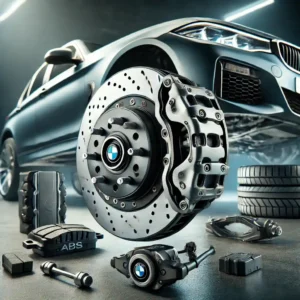
BMW brakes are engineered for precision, combining advanced tech with performance-grade materials. As part of common BMW repairs, brake system maintenance is essential to ensure optimal performance and safety. Here’s what makes BMW brakes unique:
Key Components
- Rotors: BMW uses high-carbon or composite rotors for heat dissipation. Slotted or drilled designs reduce brake fade during aggressive driving.
- Pads: Ceramic or semi-metallic pads balance noise reduction and durability.
- ABS Module: Monitors wheel speed 100 times per second to prevent lockups.
- Brake Fluid: DOT 4 or 5.1 fluid resists boiling under extreme temperatures (up to 509°F).
Why BMW Brakes Are Unique
BMW’s M Performance models feature larger calipers, cross-drilled rotors, and upgraded cooling ducts. Even standard models use wear sensors and adaptive algorithms to optimize stopping power.
Warning Signs of Trouble
- Squealing or Grinding: Indicates worn pads or brake rotor issues.
- Vibrations: Warped rotors or uneven pad deposits.
- ABS Light: Signals ABS troubleshooting is needed.
- Spongy Pedal: Often tied to air in lines or degraded fluid (brake fluid maintenance).
Pro Tip: BMW’s iDrive system alerts drivers to brake wear. Never ignore these warnings!
2. 5 Critical BMW Brake Repairs You Can’t Ignore
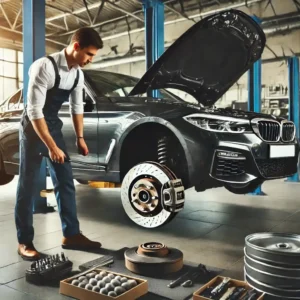
Repair #1: Brake Pad Replacement
Brake pad replacement is the most common repair. BMWs use wear sensors that trigger a dashboard alert, but don’t wait for the warning!
- Symptoms: Screeching sounds, longer stopping distances, or a glowing brake warning light.
- Process:
- Lift the vehicle and remove the wheels.
- Compress caliper pistons with a C-clamp.
- Replace pads and reset wear sensors.
- Cost:
- 300−
- 300−600 (parts + labor). Genuine BMW Parts ensure perfect fitment and longevity.
- DIY Risks: Improper installation can damage calipers or rotors.
The Car Lab Tip: Aggressive driving wears pads faster. Schedule inspections every 12,000 miles.
Repair #2: Fixing BMW Rotor Issues
Warped or scored rotors cause vibrations and reduce stopping power. Worn-out brake discs are often the culprit.
- Symptoms: Steering wheel shake, pulsating pedals, or grooves on the rotor surface.
- Repair vs. Replace:
- Resurfacing: Viable if rotors are above BMW’s minimum thickness (e.g., 28mm for most models).
- Replacement: Required for cracked or excessively thin rotors.
Repair #3: ABS Troubleshooting
An illuminated ABS light signals brake system diagnostics are needed. Common causes:
- Faulty Wheel Sensors: Dirt or corrosion disrupts signals.
- Low Brake Fluid: Triggers ABS warnings (tied to brake fluid maintenance).
- Hydraulic Pump Failures: Rare but costly (up to $1,500 to replace).
Repair #4: Brake Fluid Maintenance
Dampness absorption by old fluid causes brake systems to corrode and become soft.
- BMW’s Recommendation: Flush fluid every 2 years or 30,000 miles.
- Fluid Types:
- DOT 4: Standard for most models.
- DOT 5.1: Higher boiling point for M cars.
- DIY Risk: Improper bleeding can introduce air into the BMW Electrical System, causing ABS malfunctions.
Pro Tip: Use a fluid tester to check moisture content. Over 3% = time for a flush.
Repair #5: Brake Caliper Problems
Sticking calipers cause uneven pad wear and pulling.
- Symptoms: Car drifts left/right when braking, excessive heat from one wheel.
- Fix:
- Rebuild: Clean and lubricate slide pins (
- 200−
- 200−400).
- Replace: Necessary for seized pistons (
- 500−
- 500−800).
- Upgrade Tip: BMW M Sport calipers improve responsiveness and aesthetics.
The Car Lab Advantage: We pressure-test calipers to ensure no internal leaks.
3. Advanced Diagnostics for BMW Brakes
Modern BMWs rely on complex electronics. Brake system diagnostics require:
-
BMW-Specific Tools:
ISTA/INPA software reads proprietary codes (e.g., C101F for pressure sensor faults).
-
Common Error Codes:
- C0245: ABS pump failure.
- C101F: Brake pressure sensor malfunction.
-
Dealership vs. Independent Shops:
- Dealers: Charge $150/hr but have the latest tools.
- Independents: The Car Lab Auto Repair Center offers 30% lower rates with OEM-grade equipment.
4. Why Are My BMW Brakes Squeaking?
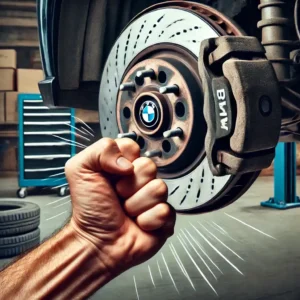
Annoying noises aren’t always emergencies. Common causes:
- Glazed Pads: Overheated pads harden and squeal. Fix with sanding or replacement.
- Dirty Components: Dust or debris on rotors. Clean with brake cleaner.
- Loose Shims: Reattach with high-temperature adhesive.
When to Worry: Metallic grinding means worn-out brake discs are damaging the calipers.
Real-World Example: A 2017 BMW X5 owner resolved squeaking by upgrading to ceramic pads and cleaning rotors.
5. Emergency Brake Repair Scenarios
Never ignore these red flags:
-
-
Complete Brake Failure:
- Downshift gently to slow the car.
- Pump the pedal to build hydraulic pressure.
- Use the parking brake gradually.
-
-
Pedal Sinks to Floor:
This is likely a fluid leak. Tow to The Car Lab immediately.
The Car Lab’s 24/7 Service: We offer free towing for members and same-day repairs.
6. Maximizing Your BMW’s Braking Performance
-
Upgrades:
- Slotted Rotors: Reduce brake fade by 20%.
- Stainless-Steel Lines: Improve pedal feel.
- Ceramic Pads: Less dust and noise.
-
Track-Ready Mods:
- Cooling ducts for sustained performance.
- Racing fluid (e.g., Castrol SRF) with a 590°F boiling point.
-
Seasonal Care:
- Winter: Swap to cold-weather pads.
- Summer: Inspect for overheating.
Did You Know? The M Division of BMW conducts brake tests on the Nürburgring until they reach 10,000 miles of total mileage before approval.
Conclusion
Your BMW deserves expert care. Early inspections of brake pads combined with ABS diagnostics help prevent money loss and accidents. As a BMW brake repair specialist, The Car Lab Auto Repair Center employs Genuine BMW Parts to achieve sustainable outcomes.
Frequently Asked Question
Can I drive with squeaky brakes?
Short trips are okay but get brake system diagnostics ASAP to avoid rotor damage.
How often should BMW brake fluid be replaced?
Every 2 years or 30,000 miles whichever comes first.
Are BMW brake parts interchangeable with other brands?
No, always use Genuine BMW Parts for perfect compatibility.

Address
24b street, Al qouz Industrial area 2, Dubai


Phone
+97143365597

info@thecarlab.ae

Brands
Services
Contact Us
-
800 8257
-
+97143365597
-
info@thecarlab.ae
-
24b street, Al qouz Industrial area 2, Dubai
-
Open daily from 8:00 am - 8:00 pm
-
24/7 Customer Care Service